Visualizzazione post con etichetta Edwardian Tea Party. Mostra tutti i post

martedì 29 gennaio 2013

Tea Cup Tuesday - Edwardian Wishes


Benvenuti al primo Tea Cup Tuesday dei questo nuovo anno.
Molti mesi sono trascorsi dal mio ultimo contributo sull'argomento, nonostante il tè faccia oramai parte integrante della mia vita, e mi ispiri ogni giorno pensieri positivi e propositi.
Riflettendo su quale tazza fosse quella giusta per l'occasione, ho scelto questo delicato trio inglese datato 1900 circa, completamente decorato con violette dipinte a mano. Le violette sono il fiore più rappresentativo del Natale e dell'inizio d'anno lungo tutto il periodo Vittoriano ed Edoardiano, soprattutto sui biglietti di auguri.
Mi sembrava molto giusto perciò cominciare con la delicata poesia legata a questo fiore, con tutte le dolci promesse di cui esso si fa portavoce.

***

Welcome to the first Tea Cup Tuesday of this new year.
Many months have passed since my last contribution on the subject, despite the tea is now an integral part of my life, and inspire me every day positive thoughts and intentions.
Reflecting on the cup was right for the occasion, I chose this delicate English trio dated circa 1900, fully decorated with hand painted violets. Violets are the flower most representative of Christmas and the beginning of the year throughout the Victorian and Edwardian period, especially on greeting cards.
It seemed very wrong, therefore begin with the delicate poetry related to this flower, with all the sweet promises of which it is the mouthpiece.

English china tea cup, saucer and plate, 1900 circa


La viola è un fiore legato alla sfera della memoria e degli affetti e non dobbiamo dimenticare quanto fosse importante, in tempi ormai lontani, comunicare attraverso simboli ed allusioni, essendo del tutto sconveniente l'espressione libera ed esplicita dei propri sentimenti.
Immaginate, dunque, fanciulle romantiche conservare religiosamente tra le pagine di un libro una violetta ricevuta in dono da un giovanotto, e baciarla e bagnarla di lacrime fino al matrimonio ed oltre...
A tutto questo mi fa pensare questa bellissima tazza, accogliente, romantica, delicata.
Sia la tazza che il piattino e il piatto sono smerlati e bordati d'oro ricco, a richiamare anche nella forma il concetto del fiore (forma ricorrente per tutto il periodo Edoardiano)

***
  
The violet is a flower related to the sphere of memory and affection, and we must not forget how important it was, in days gone by, to communicate through symbols and allusions, being quite inconvenient the free expression and explicit about their feelings.
Imagine, then, romantic girls religiously preserve between the pages of a book a violet received as a gift from a young man, and kiss it and wet it with tears until marriage and beyond ...
To all this makes me think this beautiful cup, cozy, romantic and delicate.
Both the cup saucer and plate are scalloped and edged in rich gold, recalling also in form the concept of the flower (recurring form throughout the Edwardian period)


Attraverso l'obiettivo della macchina fotografica, mi pare di vederla per la prima volta: si apre per me un magico mondo attraverso cui io torno indietro e indietro nel tempo, in un insolitamente luminoso pomeriggio di gennaio in cui una malinconica Signora inglese prepara il suo tè e lo versa fumante in questa tazza, pensando al suo amante segreto...  Le lacrime cadono dentro la tazza e si mischiano alla nera bevanda, rendendola un poco più amara...

***

Through the lens of the camera, I can see it for the first time: it opens for me a magical world through which I'm going back and forth in time, in an unusually bright afternoon in January, when a melancholy English Lady prepares her tea and pours it in this steaming cup, thinking of her secret lover ... Tears fall into the cup and mix the black beverage, making it a little more bitter ...


Oltre che per la decorazione e per la forma, questa tazza si distingue per un bellissimo manico a forma di orecchio, una delle mie preferite...
Ci sono dei piccoli rilievi lungo il margine e solo un tocco dorato in cima.

***

In addition to the decoration and shape, this cup is characterized by a beautiful handle in the shape of the ear, one of my favorites.
There are small hills along the border and only a golden touch at the top.


Silver plated jam spoon hanle, 1900 circa


Febbraio è ormai alle porte e per me sarà un mese pieno di ricorrenze e avvenimenti. 
Tempo di compleanno ;-)
Questa è una delle nuove tazze che utilizzerò per il mio prossimo Edwardian Tea Party e voi tutti la vedete in anteprima.

***

February is almost upon us and for me it will be a month full of celebrations and events. 
Time to birthday ;-)
This is one of the new cups that I will use for my next Edwardian Tea Party and all you see it in preview.


Earl Grey tea

Sono felice che abbiate condiviso con me questa tazza di tè e a tal proposito ricordo a voi tutti che presto si celebrerà un give away che avrà senz'altro a che fare anche col tè. Tornate a trovarmi :-)

Vi abbraccio con rinnovato affetto


***

I am happy that you have shared with me this cup of tea and in this respect I remind all of you that soon we will celebrate a give away that will undoubtedly have something to do with the tea. Come back and see me :-)

With this post I am joining the:
Tea Cup Tuesday hosted by  Martha and Terri
Tea Time Tuesday hosted by Sandi

 I embrace you with renewed affection


martedì 2 ottobre 2012

Tea Cup Tuesday - Autumn 1890 circa


Cari amici, benvenuti al mio secondo Tea Cup Tuesday.
Dal mio primo e, fino ad oggi, unico altro post su questo affascinante argomento, tutta l'estate è trascorsa e molte cose sono accadute: posso tranquillamente dire che non si è trattato di una stagione felice perciò accolgo con serenità e gioia l'arrivo dell'Autunno.
Poichè la giornata è magnifica, la luce dolce e carezzevole, e il buon umore mi assiste, mi sembra arrivato il momento di mettere mano alla macchina fotografica e condividere con tutti voi questo altro tesoro della mia collezione.
Questa consta attualmente di 18 tea trio (tazza, piattino e piatto da dolce) e, secondo le mie ricerche (non sempre facili, come vedrete), essi sono databili più o meno tra il 1870 e il 1915.
Quando si inizia una collezione è importante darsi delle regole, soprattutto per non incorrere nel pericolo di acquistare alla rinfusa, diminuendo la coerenza e il valore della propria collezione.
La mia idea era e rimane quella di mettere insieme tutto l'occorrente per servire un Edwardian Tea party e, anche volendo essere molto generosi con i dati storici, l'Età Edoardiana, con il suo naturale retaggio Vittoriano, si considera conclusa al più tardi nel 1918, con la fine della Prima Guerra Mondiale.
Volendo essere più precisi, essa và dal 1901 (morte della Regina Vittoria e conseguente ascesa al trono di suo figlio Edoardo VII) al 1910 (morte di Edoardo).
Ma è naturale che l'aura di questa epoca d'oro, di bellezza ed eleganza, come dicevamo la scorsa volta, perdurò per molti anni ancora ed è quindi abbastanza corretto considerare di epoca edoardiana anche una tazza del 1915.


***

Dear friends, welcome to my second Tea Cup Tuesday.
From my first and, at this day, the only other post on this fascinating topic, the whole summer has passed and many things have happened: I can safely say that it was not a happy season so I accept with serenity and joy  the arrival of Autumn.
Since the day is beautiful, light sweet and gentle, and good humor will help me, I think the time came to put my hand to the camera and share with all of you this other treasure in my collection.
This currently consists of 18 tea trio (cup, saucer and cake plate) and, according to my research (not always easy, as you will see), they can be dated more or less between 1870 and 1915.
When you start a collection it is important to set rules, especially to avoid the risk of buying in bulk, reducing the coherence and value of your collection.
My idea was and is to bring together everything you need to serve an Edwardian Tea Party, and even willing to be very generous with the historical data, the Edwardian Age, with its natural Victorian heritage, shall be closed no later than in 1918, with the end of the First World War.
To be more exact, it goes from 1901 (death of Queen Victoria and subsequent ascended the throne of her son Edward VII) to 1910 (death of Edward).
But it is natural that the aura of this golden age, beauty and elegance, as we said last time, lasted for many years and is therefore quite correct to consider to the Edwardian era even a cup of 1915.


Un po' di storia

La storia del tè è davvero affascinate e affonda le sue radici e origini in un lontanissimo passato, in Cina e in Giappone, ben prima che si intrecciasse con la storia Inglese, nella metà del 1600.
Molte sono le leggende legate alla scoperta del tè come bevanda: qui non ci dilungheremo, basti sapere che in tutti i Paesi in cui il tè è diventato popolare, fu bevuto inizialmente per le sue proprietà medicinali e non come corroborante indulgenza.
I Portoghesi e gli Olandesi furono i primi commercianti a trasportare regolarmente il tè fino ai porti di Francia, Olanda e coste baltiche, a partire dal 1610.
Piccoli quantitativi probabilmente filtrarono in Inghilterra, come risultato dei viaggi di mercanti e membri della corte, ma non si registra vendita di tè in Inghilterra prima del 1658.
Con i mercantili di tè, cominciarono ad arrivare naturalmente anche teiere e ciotole da Cina e Giappone.
La qualità della fine porcellana emozionò a tal punto i vasai europei, che questi cominciarono a sperimentare nuove formule per cercare di eguagliare la qualità inarrivabile delle porcellane orientali.
Fu nel 1660 che la parola "china" venne usata per la prima volta in riferimento alle stoviglie importate dall'Oriente.
Quando il tè arrivò per la prima volta in Inghilterra, veniva venduto sfuso dagli apotecari e mercanti, ed divenne una bevanda diffusa nelle popolari "coffee - houses", luogo di incontro per gli uomini di tutte le estrazioni sociali.
Anche le donne bevevano il tè, ma solo nella privacy delle loro case.

***

A little history.
 
The history of tea is really fascinating and has its roots and origins in the distant past, in China and Japan, well before intertwined with the history of English in the mid 1600s.
There are many legends related to the discovery of tea as a beverage: we will not dwell here, suffice it to say that in all the Countries where tea became popular, was initially drank for its medicinal properties and not as refreshing indulgence.
The Portuguese and the Dutch traders were the first to carry the tea regularly to ports in France, the Netherlands and the Baltic coasts, starting in 1610.
Small amounts probably seeped in England, as a result of the voyages of merchants and members of the court, but is not registered the sale of tea in England before 1658.
With tea merchant, began to arrive of course, teapots and bowls from China and Japan.
The quality of fine china thrilled to the point the Europeans potters, then they began to experiment new ways to try to match the unmatched brilliance of oriental porcelain.
It was in 1660 that the word "china" was used for the first time in reference to the dishes imported from the East.
When the tea arrived for the first time in Britain, was sold loose by the apothecaries and merchants, and it became a popular drink in the "coffee - houses", a meeting place for people of all walks of life.
Even the women drank tea, but only in the privacy of their homes.


Durante il diciasettesimo secolo il prezzo del tè era estremamente alto e aumentò maggiormente quando Carlo II introdusse una pesante tassa, perciò esso era da considerarsi una comodità davvero rara, molto al di là delle possibilità delle famiglie di ceto medio, ma contrabbando, adulterazioni, e mercato nero resero più facili le cose...
Quando, agli inizi del diciottesimo secolo, vennero chiuse le coffe houses, i luoghi di incontro per bere il tè si spostarono nei magnifici giardini pubblici e vennero aperti anche alle donne e ai bambini.
Alla metà del diciottesimo secolo Il tè era diventato la bevanda più popolare in Inghilterra.
Esso era bevuto a qualunque ora del giorno e della sera, grazie anche alla consuetidune, da parte della upper class, di servire, eleganti tazze di tè, durante il dopocena.
Agli inizi del diciannovesimo secolo, la Duchessa di Bedford (damma di compagnia della Regina Vittoria) si dice abbia servito per la prima volta il tè del pomeriggio accompagnato da un pasto leggero, introducendo così la consuetudine che è ancora parte integrante della vita degli inglesi.
Poichè il nuovo trend divenne tanto popolare, le manifatture di porcellana e argento cominciarono a produrre una immensa varietà di equipaggiamento per il tè, che comprendeva teiere, zuccheriere, lattiere, ciotole, tazze e piattini, cucchiaini e vassoi, pinze da zucchero, caddies...
Il primo tea shop di Londra, aprì nel 1884 e la moda di consumare il tè fuori casa continuò per tutto il periodo vittoriano e crebbe maggiormente durante l'epoca Edoardiana con l'istituzione di eleganti sale da tè allietate da orchestra e danze durante l'inverno, e scampagnate in bicicletta d'estate.
Dopo un breve declino, il rito del tè è di nuovo in auge e vecchie teiere e tovaglie ricamate sono state tirate fuori dai polverosi bauli conservati in soffitta: la gente sta di nuovo gustando il piacere di sedere intorno ad un tavolo ben apparecchiato per sorbire la nera e fumante bevanda con beneficio del corpo e dell'anima :-)

***

During the seventeenth century, the price of tea was extremely high and increased further when Charles II introduced a heavy tax, so it was considered a very rare comfort, far beyond the reach of middle-class families, but smuggling, adulteration, and black market, made things easier ...
When, at the beginning of the eighteenth century, coffee houses were closed, meeting places for drinking tea moved in the magnificent public gardens and were open also to women and children.
The mid-eighteenth century, tea had become the most popular drink in England.
It was drunk at any time of the day or evening thanks to consuetidune by the upper class to serve elegant cups of tea during the after dinner.
At the beginning of the nineteenth century, the Duchess of Bedford (Queen Victoria made of honor) is said to have served for the first time afternoon tea accompanied by a light meal, thus introducing a custom which is still an integral part of British life.
As the new trend became so popular, manufacturers of china and silver began to produce a vast variety of equipment for tea, which included teapots, sugar bowls, milk jugs, bowls, cups and saucers, spoons and trays, sugar tongs, caddies. ..
The first tea shop in London was opened in 1884, and the fashion of the tea consumed outside the home continued throughout the Victorian period and grew the most during the Edwardian era, with the creation of elegant tea rooms enlivened by orchestra and dancing during winter, and cycling and picnics in the summer.
After a brief decline, the ritual of tea is back in vogue and old teapots and tablecloths were pulled out of the dusty trunks stored in the attic: the people are again enjoying the pleasure of sitting around a table well prepared to put up with the black and steaming drink with the benefit of body and soul :-)


Il trio che vi mostro oggi risale alla tarda epoca Vittoriana e ne è un magnifico esempio di lusso e sobrietà insieme.
Tutte le superfici sono riccamente decorate a mano con ramage di rosa canina, fiori e bacche, e tutti i bordi e il manico sono dorati, uno strato corposo e denso di caldo oro.
Ho scelto questa tazza per i suoi colori caldi e dolci, molto autunnali, nonostante la rosa canina fiorisca da maggio a luglio...

***

The trio that I show you today dates back to the late Victorian era and is a magnificent example of luxury and elegance together.
All surfaces are richly hand decorated with foliage of wild rose, flowers and berries, and all the edges and the handle are golden, full-bodied and dense layer of warm gold.

I chose this cup for its warm colors and soft, very autumnal, despite the wild rose bloom from May to July ...


Su nessuno dei tre pezzi compare il marchio della manifattura ma io sospetto (e spero) che si tratti di Doulton, poichè la lettera A sul fondo della tazza, unita al numero del modello, collocherebbero questo trio esattamente alla data comunicata dal venditore al momento dell'acquisto.
Se qualcuno dovesse avere maggiorni informazioni a riguardo,  sarei grata se volesse condividerle con me.

***

On any of the three pieces appears the mark of manufacture but I suspect (and hope) that this is Doulton, as the letter A on the bottom of the cup, combined with the model number, this trio would place exactly on the date communicated by the seller at the time of purchase.
If someone were to have more information about it, I would be grateful if you would share with me.


Quando si apparecchia la tavola per un tè Edoardiano, tutti i dettagli sono importanti: il tovagliolo non deve essere di carta. Oggi io ho utilizzato un'altro dei fazzoletti con il mio monogramma, magnificamente ricamato, circa 1900.

***

When it sets the table for a tea Edwardian, all details are important: the napkin should not be made of paper. Today I used another of handkerchiefs with my monogram beautifully embroidered, circa 1900.


La tovaglia dovrà essere bianca, di lino o di cotone.
Se avete la fortuna di possedere una tovaglia irlandese, lascerete i vostri commensali ammirati e felici: le mani esperte e sapienti delle donne irlandesi di epoca edoardiana hanno prodotto capolavori di grazia soave, privilegiando motivi floreali, fiocchi, nodi d'amore, foglie d'edera e pizzo, pizzo e ancora pizzo.


***


The tablecloth must be white, linen or cotton.
If you are lucky enough to own an Irish tablecloth, let your guests happy and admired: the expert hands of wise women of Edwardian era, have produced masterpieces of gentle grace, favoring floral, bows, love knots, ivy leaves and lace, lace and more lace.


In un'altra occasione vi parlerò di un menù degno della regina Vittoria, ma oggi mi accontento di accompagnare il mio tè con dei deliziosi muffin alle olive, poichè preferisco di gran lunga i cibi saporiti a quelli dolci.


***


On another occasion, I'll talk about a menu worthy of Queen Victoria, but today I'm happy to accompany my tea with delicious muffins with olives, as I much prefer savory foods to sweet.


Tutti i cenni storici di questo post, e molto altro, troverete nel delizioso libro di Jane Pattigrew "Time for Tea: a book of days", in vendita su Amazon.

***

All historical background of this post, and much more, you will find the delightful book by Jane Pattigrew "Time for Tea: a book of days", for sale on Amazon


Bene, ora che tutto è pronto, non rimane che mettere il bollitore sul fornello e attendere il sibilo.
Siete tutti invitati.

Con questo post partecipo al Tea Cup Tuesday ospitato da Terri nel suo adorabile blog.

***
  
Well, now that everything is ready, all that remains is to put the kettle on the stove and wait for the whistle.
You are all invited.


With this post I participate in the Tea Cup Tuesday hosted by Terri in her adorable blog.


martedì 19 giugno 2012

Tea Cup Tuesday - My very first


Cari amici, innanzitutto un abbraccio affettuoso.
Ormai è trascorso quasi un mese dal mio ultimo post ma, nonostante il silenzio, come sempre molti progetti sono maturati e hanno preso vita.
Come già alcuni di voi sapranno, tra le mie passioni c'è anche quella per gli oggetti antichi, la quale da principio mi ha portato ad osservare, poi a studiare, ed infine a collezionare piccoli pezzi, legati alla vita quotidiana di un tempo passato, che io mi sforzo di preservare e fare rivivere nel mio mondo.
Qualche tempo fa accennai al fatto che per il mio quarantesimo compleanno ho avuto la grande gioia di riuscire ad organizzare un Edwardian Tea Party al quale ho invitato solo pochi intimi... E' stata una meravigliosa occasione per trasformare il mio salotto in una porta nel tempo. Io ho accolto gli invitati indossando uno dei mie abiti da tè del 1900 e una elaborata acconciatura stile "gibson girl".
La tavola era apparecchiata con grande cura e tutto, dalla tovaglia alle posate, dai piatti alle tazze, dalla teiera ai tovaglioli era assolutamente originale dell'epoca. Perfino la musica in sottofondo era quella giusta, la stessa che l'orchestra suonava sul Titanic, nel 1912...
Il menù è stato attentamente studiato e ho cercato di riprodurre, anche nei sapori, l'atmosfera di un salotto del 1900.
In un angolo della stanza, il mio baule da viaggio edoardiano stava aperto, svelando finalmente tutto il suo prezioso e delicato contenuto e, per una volta, non c'era il divieto di toccare ma, al contrario, l'invito a curiosare tra mutandoni, camicie da notte, corsetti, calze, scarpe, sottogonne, vecchie bambole, perfino un ombrellino parasole, uno dei mie pezzi più preziosi...
Un manichino indossava il completo da giorno in seta e l'insieme era così affascinante che le ore sono volate senza che ce ne accorgessimo.
Ho letto, negli occhi dei miei pochi invitati, una gioia pura ed inattesa per avere potuto prendere parte ad un pomeriggio così diverso e lontanissimo da qualunque cosa loro si attendessero (nessuno di essi sapeva niente in anticipo, ciascuno ha ricevuto a casa un invito alquanto misterioso...)
Dopo aver fatto cenno a questo tea party edoardiano, molto di voi si sono detti curiosi di sapere di più in proposito, anche perchè, misteriosamente, l'amore per il tè è una delle cose che accomuna i miniaturisti, proprio come i gatti, il giardinaggio e il ricamo...
Ebbene, sappiate che non esiste una solo foto di questo straordinario pomeriggio. Io stessa ho voluto che per una volta, dimenticassimo di catturare le emozioni in qualche immagine banale, ma vivessimo intensamente quelle ore indimenticabili e fuggitive :-)
Mentre mi preparavo ad organizzare il mio tea party, ho scoperto che esiste una splendida occasione di condivisione della magica atmosfera che il tè è capace di creare, e che ogni martedì si rinnova in decine e decine di splendidi post che fanno davvero il giro del mondo: il Tea Cup Tuesday.
Così ho deciso di partecipare anche io, mostrando a tutti la mia piccola collezione e, di volta in volta, raccontando aneddoti, curiosità, ricette, e pettegolezzi legati da sempre alla vita privata delle donne.
Mi è stato spiegato da Terri, una delle gentili "padrone di casa", che ciascuno può organizzare il proprio Tea Cup Tuesday con uno stile diverso, fermo restando che deve comparire, naturalmente, almeno una tazza :-)
Perciò da oggi, cari amici, io assolverò al felice piacere di condividere le mie tazze, e insieme ad esse tutto il mio amore per il periodo Vittoriano ed Edoardiano, età dell'oro per la cerimonia del tè, in cui si è sublimata tutta la bellezza e poesia ed eleganza effimare di cui uomini e donne siano capaci.
Effimera ma indispensabile...


***


Dear friend, first of all an affectionate embrace.
It is now almost a month since my last post but, despite the silence, as always, many projects have matured and have come to life.
As some of you may know, one of my passions is also the one for antiques, which at first led me to observe, then to study, and finally to collect small pieces of daily life of a bygone, which I endeavor to preserve and revive in my world.
Some time ago I mentioned that to my fortieth birthday I had the great joy of being able to organize an Edwardian Tea Party to which I have only invited a few close friends ... It was a wonderful opportunity to transform my living room into a doorway in time. I welcomed the guests wearing one of my 1900 tea dresses and an elaborate "gibson girl" hairstyle.
The table was laid with great care and everything, from tablecloth to cutlery, from dishes to cups, from napkins to teapot, was absolutely original. Even the background music was the right one, the same as the band played on the Titanic in 1912 ...
The menu has been carefully studied and tried to play, even in the flavors, the ambience of a living room in 1900.
In one corner of the room, my Edwardian traveling trunk was opened, finally revealing all his precious and delicate content and, for once, there was not a ban on touching but rather, an invitation to browse through panties, nightgowns, corsets, stockings, shoes, petticoats, old dolls, even a parasol, one of most valuable pieces in my collection...
A mannequin wearing the outfit in silk and the whole day was so charming that hours have flown without our noticing.
I read in the eyes of my few guests, a pure and unexpected joy to have been able to take part in an afternoon so different and yet very far from anything they had expected (none of them knew anything in advance, each received a call at home rather mysterious ...)
After making mention of this Edwardian tea party, a lot of you said they were curious to know more about it, also because, mysteriously, the love of tea is one of the things that unites the miniaturists, just like cats, gardening and embroidery ...
Well, know that there is not only a picture of this extraordinary afternoon. I myself have wanted that for once, forget about capturing the emotions in some trivial image, but intensely lived those unforgettable hours and fugitive :-)
While I was preparing to organize my tea party, I discovered that there is a wonderful opportunity to share the magical atmosphere that tea is able to create, which is renewed every Tuesday in dozens and dozens of posts that are really beautiful around the world : Tea Cup Tuesday.
So I decided to participate in, showing to all my little collection, and from time to time, telling anecdotes, trivia, recipes, and gossip that has always been tied to the private lives of women.
I was told by Terri, one of kind "landladies", that you can organize your Tea Cup on Tuesday with a different style, except that should occur, of course, at least one cup :-)
So now, dear friends, I absolve the happy pleasure to share my cups, and along with them all my love for Victorian and Edwardian period, golden age for the tea ceremony, in which its sublimated all ephemeral beauty and poetry and elegance of which men and women are capable.
Ephemeral but essential ...

Victorian Tea Trio, England 1890 circa


Per il mio primo Tea Cup Tuesday ho scelto questo splendido trio di epoca Vittoriana, il quale mi è sembrato particolarmente adatto all'occasione, perchè è semplice, elegante, colorato, pieno di attrattiva, senza essere invadente o pomposo, proprio come vorrebbe essere questa serie di pagine dedicate al tè.
Premetto, a beneficio dei collezionisti esperti, che la mia collezione è frutto più che altro di acquisti istintivi, basati più sul mio gusto personale e sulle mie emozioni, piuttosto che sul valore intrinseco delle tazze. Io non ho ancora esperienza e conoscienze sufficienti per poter valutare appieno il vero valore di questi oggetti e prego chiunque ravvisi qualche errore nelle mie didascalie, di intervenire, e correggermi :-)

***

For my first tea cup Tuesday, I chose this beautiful Victorian era tea trio, which seemed particularly appropriate for the occasion, because it is simple, elegant, colorful, full of charm, without being obtrusive or ostentatious, just as would be this series of pages devoted to tea.
I state for the benefit of expert collectors, that my collection is the result mostly of purchases instinctive, based more on my personal taste and my emotions, rather than the intrinsic value of the cups. I have not yet sufficient experience and knowledges to fully assess the true value of these objects and I ask anyone who considers a mistake in my captions, to intervene and correct me :-)


L'interno della tazza è delicatamente decorato con lo stesso motivo floreale dell'esterno, perciò ho preferito immortalare l'immagine prima di riempire la tazza di tè.
Il trio è composto dalla tazza, dal piattino, e dal piatto da dolce, perfetto per gustare la nera bevanda in compagnia delle prelibatezze preferite dalla Regina Vittoria, e in auge fino ai giorni nostri (ma di questo parleremo in un altro post).
In nessuno dei tre pezzi è presente alcun marchio o numero.
Il bordo dorato è ancora pieno, corposo, intatto.

***

The inside of the cup is delicately decorated with the same floral pattern of the exterior, so I decided to capture the image before filling the cup of tea.
The trio is composed of the cup, the saucer and the cake plate, perfect for enjoying the black beverage in the accompanied with the delicacies preferred by Queen Victoria, and in vogue to this day (but more about that in another post).
In none of the three pieces is no mark or number.
The gold rim is still full-bodied, intact.


Ho apparecchiato il piccolo tavolo da caffè della mia veranda per servire questo rinfrescante tè estivo, utilizzando una candida tovaglia irlandese (1900 circa), impreziosita da splendidi ricami: il tessuto è così consumato che io la utilizzo solo per farla ammirare da qualche amica appassionata (e da voi) ma non oso utilizzarla per mangiare, perchè se si macchiasse sarebbe un disastro!

***

I prepared my small coffee table in my sunroom, to serve this refreshing summer tea, using a white Irish tablecloth  (1900 approx), embellished with beautiful embroidery: the fabric is so worn that I use it only to see some friends passionate (and you) but I dare not use it to eat, because if you stain it would be a disaster!


Il tovagliolo con il mio monogramma (1900 circa) è in realtà uno splendido fazzoletto da sposa, di garza di cotone, grande quanto una tovaglietta!

***

The napkin with my monogram (1900 approx) is actually a beautiful wedding handkerchiefs, cotton gauze, big as a placemat!


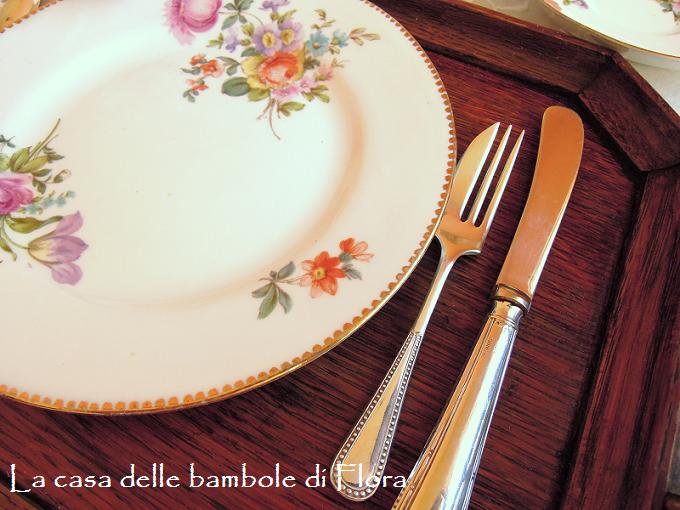
Il vassoio è un pezzo edoardiano inglese, 1900 circa.
Le posate in silver plated, che in futuro compariranno spesso, in compagnia di altre, fanno parte di tre servizi differenti, tutti di epoca Edoardiana, e rappresentano l'apparato minimo indispensabile per gustare un buon tè pomeridiano: il cucchiaino, la forchetta per il dolce (da notare che uno dei rebbi funge anche da coltello), la spatola per il burro (immancabile per toast e scones).


***

The tray is an Edwardian English piece, circa 1900.
The silver plated cutlery, which often appear in the future, in the company of others, is part of three different services, all of the Edwardian era, and they represent the minimum apparatus necessary to enjoy a relaxing afternoon tea: the spoon, a fork for dessert (note that one of the prongs doubles as a knife), a butter spatula (a must for toast and scones).


Questo trio è l'ultimo che ho acquisito in ordine di tempo, e spero di poterlo utilizzare al prossimo Edwardian Tea Party :-)
Bene, per oggi è tutto.
Io spero che vi siate divertiti a leggere questo primo Tea Cup Tuesday, sia che voi siate, come me, dei neofiti, sia che voi siate espertissimi.
Per chi volesse saggiare tutta la portata di questo argomento, prego di andare a visitare il blog di Terri, alla voce Tea Cup Tuesday :-)

Domani comincia l'Estate, in questo emisfero, e dopodomani sarà San Luigi.
Dedico questo post a mio padre Luigi, grande fotografo, da cui spero di avere appreso un poco...
Ciao babbo.

***

This trio is the last one I bought in order of time, and I hope to be able to use it the next Edwardian Tea Party :-)
 
Well, it's all for today.
I hope you enjoyed reading this first Tea Cup Tuesday whether you're, like me, a novice, whether you are most expert.
For those wishing to test the full scope of this topic, please go visit Terri's blog, under Tea Cup Tuesday :-)

Tomorrow begins the summer in this hemisphere, and the next day will be St. Louis.
I dedicate this post to my father Luigi, great photographer, from which I hope to have learned a little ...
Ciao babbo.